
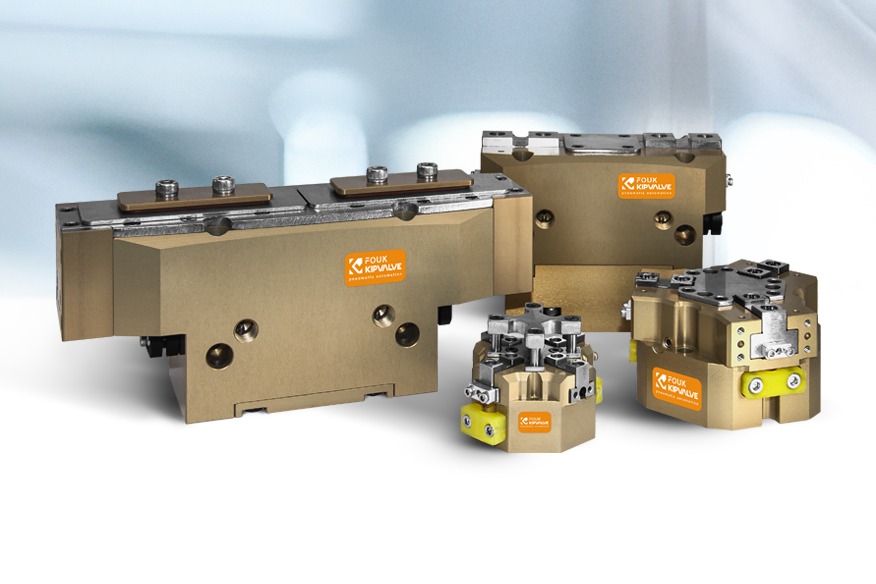
A pneumatic gripper is one of the key components in industrial automation. It is responsible for gripping, holding, and moving a part within a robotic cell, automatic loading system, or CNC machine setup. The correct selection directly affects equipment stability, positioning accuracy, and the service life of the entire system.
In practice, mistakes in pneumatic gripper selection are quite common. For example, the gripper may fail to hold a part during robot acceleration, operate with misalignment, or wear out quickly because of incorrectly selected gripping force. That is why it is important to consider not only the gripper size, but also operating conditions, workpiece type, and production process requirements.
What Tasks Should a Pneumatic Gripper Solve
Before selecting a gripper, it is important to understand exactly how the equipment will be used. The same gripper may perform well with lightweight plastic parts but be completely unsuitable for heavy metal workpieces.
We recommend considering several factors at once:
- part shape;
- workpiece weight;
- movement speed;
- production environment;
- positioning accuracy requirements;
- type of equipment where the gripper will operate.
For example, centering grippers are typically used for cylindrical parts, while parallel pneumatic grippers are more suitable for rectangular and housing-type components. If the production process involves vibration or high-speed movement, it is important to include an additional safety margin for gripping force.
In the FOUK KIPVALVE pneumatic gripper catalog, you can find solutions for different applications — from compact grippers for lightweight parts to models designed for heavy workpieces and industrial robotics.
What Parameters Should You Pay Attention To
Gripping Force
This is one of the most important parameters. Insufficient force can cause the part to slip, while excessive force may damage the workpiece or create unnecessary load on the system.
When calculating gripping force, it is important to consider:
- part weight;
- friction coefficient;
- robot acceleration;
- part position during movement.
If the robot operates with sharp acceleration or rotational movement, the gripping force reserve should be higher. This is especially important in CNC machine loading systems.
Jaw Stroke
Jaw stroke determines how wide the gripper jaws can open. It is important to consider not only the nominal part size, but also possible dimensional variations in serial production.
In practice, insufficient jaw stroke often becomes a source of unstable line operation, especially in mass production environments.
Guide System Type
To achieve high precision and long service life, it is important to select the correct guide system design. The most common solutions used in industry include:
- T-slot guides;
- roller guide systems;
- high-rigidity linear guides.
If the equipment operates in intensive conditions, saving on guide system design is usually not a good idea. A more rigid system typically handles loads better and maintains positioning accuracy longer.
When a Rotary Unit or Compensation Module Is Required
In many projects, a pneumatic gripper alone is not enough. For example, if the part must be rotated before installation, a rotary unit is used. Such solutions are especially востребованы in automated production lines and CNC loading systems.
If there is a risk of part misalignment or small positional deviations, compensation modules are additionally used. They help reduce the load on the equipment and lower the risk of damaging the workpiece or tooling.
In practice, a combination of a gripper, rotary unit, and compensation module often works significantly more reliably than using a gripper alone.
Why It Is Important to Select a Gripper for a Specific Task
There are virtually no identical production processes. Even if parts look similar, the requirements for speed, precision, and operating conditions may differ greatly.
For example:
- thin-walled parts require carefully controlled gripping force;
- heavy workpieces require a rigid structure;
- robotic lines require stable operation under high dynamic loads;
- contaminated environments require protection against dust and chips.
That is why there is no universal solution suitable for every application. It is much more effective to select a system for a specific production process from the beginning than to solve problems later during operation.
At FOUK KIPVALVE, we help select pneumatic grippers according to actual production requirements: we consider part types, equipment parameters, automation requirements, and operating conditions. This approach helps reduce implementation risks and achieve stable operation faster.
If you are selecting a solution for industrial automation, we recommend starting with an analysis of production tasks and operating parameters. Only after that should you move on to choosing a specific product series and equipment configuration.
Publication date: